

Inside the Manosphere
On The Clown Show Inside Louis Theroux's Long-Running Circus

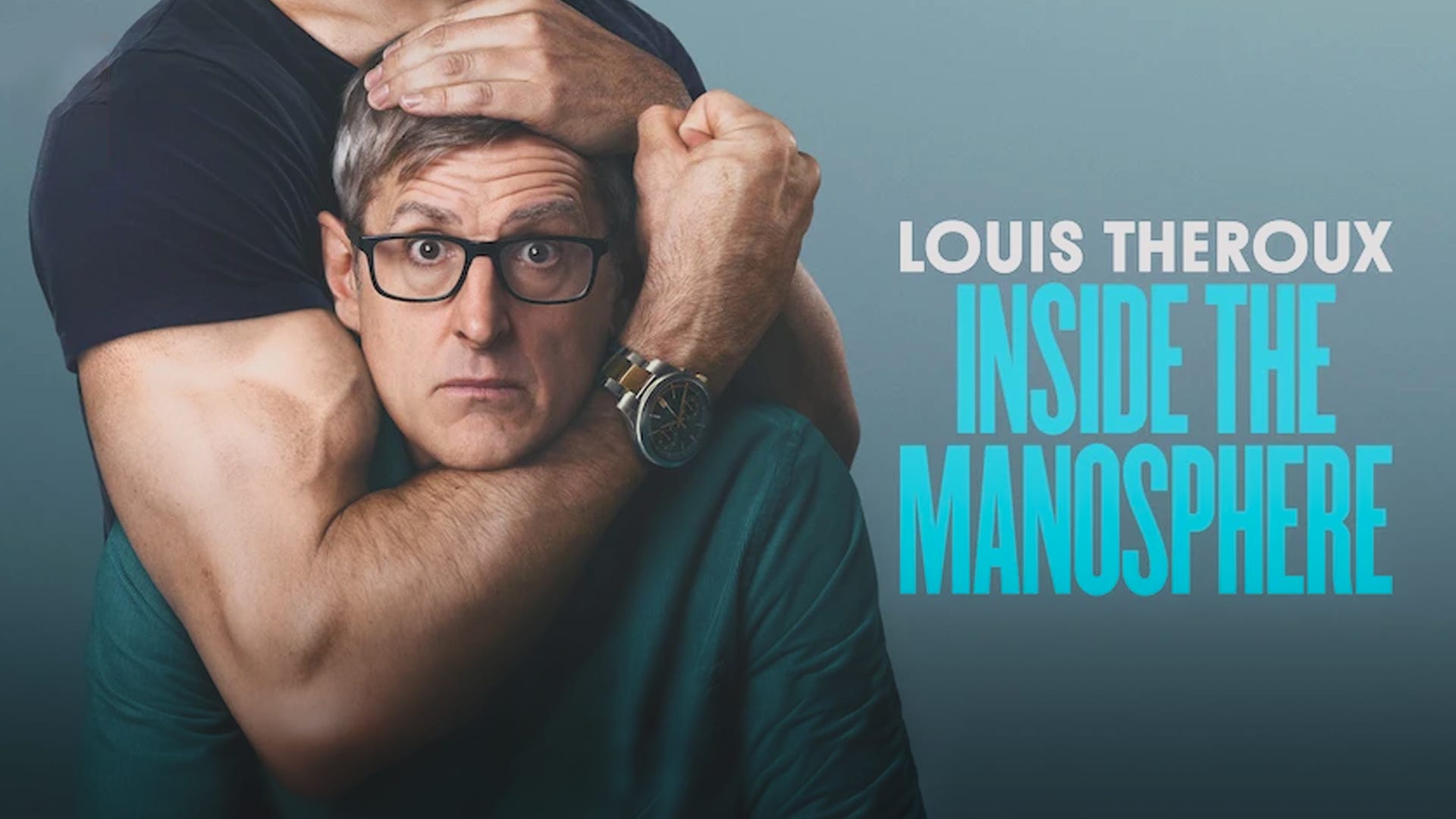
The new Netflix documentary “Inside the Manosphere” is not about “The Manosphere.”
It’s a documentary about any male influencer catering to a young, male audience who was willing to perform in Louis Theroux’s freak show for reusable coffee-cup-clutching London Capitolites.
A serious documentary about “The Manosphere” as a men’s movement that emerged in the 2010s as a response to the excesses of Third Wave feminism and the dystopian society it created could still be filmed, but this isn’t it. No attempt was made to discuss the history or context of the “manosphere,” and few of its early authors or influencers were featured or mentioned.
To be fair, Theroux’s team did make an effort.
I was actually invited to participate by producer Oli Roy, but I declined.
(See screenshots of his email and my response below.)
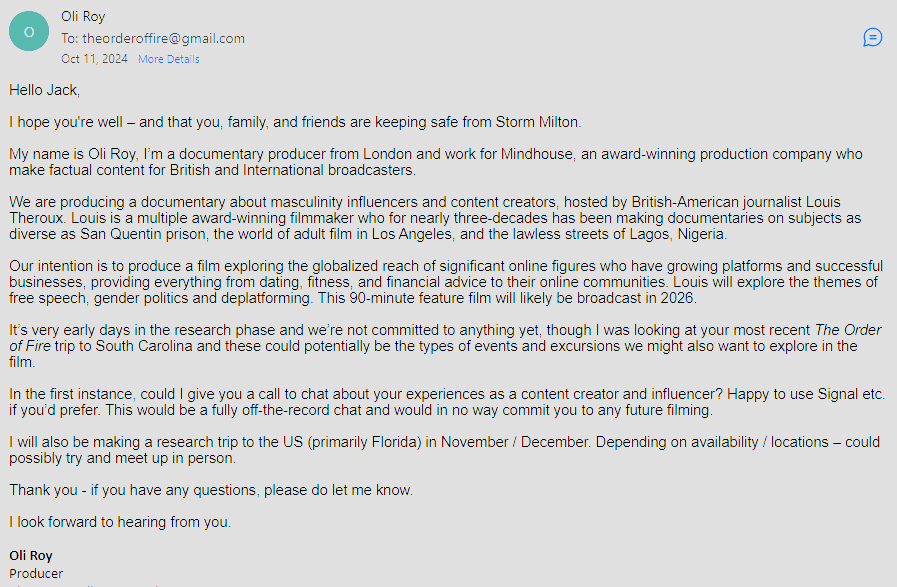
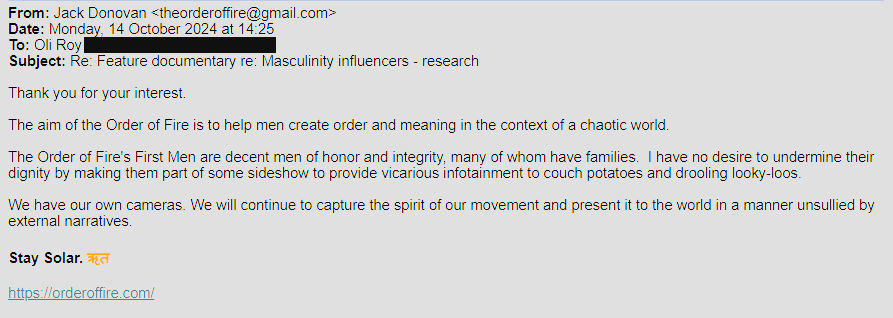
I remember talking to Anthony “Dream” Johnson about this at the time. Johnson was known as the “President of the Manosphere” for several years. He indicated that Theroux’s team had reached out to several of the other men we knew. I suspect that, like myself, none of them were ultimately willing to give Theroux the clown show he wanted.
So he found guys with names like “HStikkyTokky” (aka Harrison Sullivan) to interview instead.
The Actual Manosphere
The word “manosphere” was originally coined to describe a cluster of blogs written by and for men that emerged in the late 2000s, which were critical of feminist and liberal orthodoxies. It was a riff on the term “blogosphere,” which was used at the time to describe the online world of “blogs,” which is where we were all writing back then.
I entered the “manosphere” around 2010, when I started writing about masculinity theory for a Men’s Rights Activism (MRA) blog known as The Spearhead. These MRA blogs overlapped with Pick-Up-Artist (PUA) blogs and blogs for “Men Going Their Own Way” (MGTOW) in terms of interest and audience. There were occasional ripples in these communities from the exhausted mythopoetic men’s movement in the 1990s. However, much of the more philosophical content was focused on establishing a realistic view of the contemporary sexual marketplace and exploring human nature, a concept that blank slate feminists had rejected. We were all writing about the conflict between masculinity and feminism from different perspectives in the early 2010s, sharing thoughts and information.
The real standout was “Roissy in DC,” later known as “Heartiste.” Like many of the men writing during that period, many attempts were made to silence and deplatform him, but an archive of the original site and its history is still live at https://heartiste.org/. If you want to understand where the majority of the “red pill” ideas that are commonplace in what Theroux presents as “The Manosphere” now came from, read Heartiste.
Of course, many other authors and influencers came and went, and some of us are still around. There were manosphere meetups and conferences, such as the International Conference on Men’s Issues (ICMI), organized by MRA Paul Elam, and the 21 Convention, organized by Johnson. The 21 Convention included speakers like Dr. Robert Glover, Rollo Tomassi, Richard Cooper, Noah Revoy, Pastor Michael Foster, Richard Grannon, Pat Stedman, Elliot Hulse, Alexander Cortes, Tanner Guzy, and yours truly. There were also many, many PUA coaches, who sometimes took guys at the conference out into “the field” in Orlando nightclubs to show them how to pick up girls.
The rise of Jordan B. Peterson and influencers like Jocko Willink in the mid 2010s accompanied the return of GWOT vets, and sincere interest in the Western “crisis of masculinity” went semi-mainstream. I think a lot of vets came back from overseas, wondering, “What the hell happened to men in my country?” They encountered all of the problems with feminism and the growing gender and sexual confusion that “The Manosphere” had already outlined, tried to make sense of it, and attempted to point men in a more productive direction. A number of more positive influencers and podcasters emerged, basically replacing bloggers—including Ryan Michler’s and his “Order of Man.”
The original “Manosphere” could have reasonably been described as being politically libertarian, or “libertarian-ish” in orientation.
Chateau Heartiste’s slogan was “where pretty lies perish.” When men realize they’ve been lied to about what women want, they naturally start to wonder what other “pretty lies” the liberal establishment and mainstream media have told them. So there were many intersections between “The Manosphere” and the human biodiversity and race realist movements, religious movements, the “dark enlightenment,” and various other conservative and “right-wing” political movements.
Before Jordan Peterson, aside from PUA coaching, there wasn’t a lot of money in talking about masculinity as a man unless you spoke for “The Cathedral” as a male feminist.
However, social media revealed what advertisers have long understood: male insecurity can be monetized. So a bunch of guys who cared about money far more than they cared about helping men or being a positive influence on society appeared and saturated the “manosphere’s” market with sensational clips of them repeating “red pill” truths and distortions alike, while talking about “the matrix” as if they had just watched the 1999 movie and come up with all of these ideas themselves. Using armies of foreign video clippers, they dominated the attention economy through short-form video and streaming. In doing so, they spread both the most sensible and the most extreme ideas of the Manosphere to a new and very young audience.
For many, the early Manosphere was primarily a reaction to radical feminism. So, when feminist magazines and websites started folding, and many feminists were cowed into submission by the trans community that labeled them TERFs (Trans-Exclusionary Radical Feminists), some of the guys ran out of things to say, pivoted, or became irrelevant.
The Manosphere, as I originally experienced it, was a very big tent full of different factions of men who shared many of the same concerns about what was happening to men and masculinity. However, some feuds emerged between major players, and the whole scene started to look cliquish and melodramatic. Some performatively Christian masculinity influencers stopped cooperating with everyone else and began sabotaging or distancing themselves from any elements of the broader men’s movement they couldn’t control. Red Pill and PUA guys moved on or just focused on their areas of expertise. The fitness guys went back to the gym.
Many of us were, by the early 2020s, speaking and writing about the Manosphere in the past tense. The conferences disappeared, and to whatever extent the Manosphere endured, it had become unrecognizable to those who pioneered it.
The Manosphere had also accomplished its original mission. It shifted the Overton Window. Conversations about men and women and feminism that were beyond the pale in the 2010s were becoming mainstream, and “woke” leftism, after peaking in 2020-2022, was becoming “un-cool” with the kids.
As I mentioned above, the Manosphere’s ideas had been picked up and disseminated by a younger crop of social media-savvy influencers who could connect with younger men and possessed sales and marketing skills that many of the OG guys lacked.
All of that was happening somewhat under the radar until it started looking like Trump would win the 2024 election. The mainstream media continues to be clueless about how the left lost young men. They seem incapable of meaningful self-reflection or of recognizing that telling men what they should want is not the same as giving them what they actually want. It turns out that demonizing men for four generations and telling them to step aside because “the future is female” somehow didn’t win over their hearts or minds. But since they can’t admit fault or wrongdoing without changing their core messages, all they seem to be able to do is point, sputter, and assign blame.
“It must have been those terrible Manosphere podcasts corrupting the minds of the youth!”
All kinds of lefty rags picked up the dead Manosphere label and applied it to every male podcaster or influencer with a mostly male audience who had shifted away from the woke Democrats. Joe Rogan, Theo Von, and even Tucker Carlson were included in their new “Manosphere.”
A Clown Show Inside a Circus
Today, for bewildered leftist cucks like Theroux, the “Manosphere” includes any male influencer who goes off message and says anything that conflicts with feminism or the orthodoxies of liberal globalists.
This is the true entry point of Theroux’s documentary. “Inside the Manosphere” is not a documentary about The Manosphere as it would be recognized by anyone who was actually involved in it. It’s a documentary about the bugaboo of the Manosphere that the media is using to rationalize the international shift in the Zeitgeist revealed by Trump’s 2024 election.
In the documentary itself, Theroux plays a surrogate for his intended audience, asking concerned, out-of-touch questions and objecting when he feels compelled to signal virtue on behalf of polite society. He awkwardly follows around some extremely materialistic male influencers as they show off their cars, luxury apartments, fans, view counts, and assorted whores.
Theroux set up some “gotcha” moments for his subjects, but most of them fizzled. He was trying to catch the influencers in a contradiction and make them look like liars or frauds, but he was unsuccessful because most of these guys openly admit that they just say things to get a reaction from their audience. Their shared expertise is, for the most part, producing viral, controversial clips for short-form video platforms. When Theroux attempted to call out Harrison for saying “Fuck the Jews,” without missing a beat, Harrison said, “I was just clip farming. I don’t really hate the Jews.”
You can’t catch a man in a contradiction if he tells you his words mean nothing.
Theroux managed to make Sneako look like a kid out of his depth and Myron Gaines look like a creepy manipulator, but only by letting them be themselves. The documentary won’t hurt either of them. Harrison Sullivan came off looking exactly like the man his fans want him to be. If anyone seemed to get caught out of character, it was Justin Waller. He seemed like a potentially decent man with some kind of moral compass who was pretending to be a sociopath for the Internet. Or maybe he’s just the slickest one, and he conned me, too. I have no idea.
I turned down Theroux’s little expose because I’d want to say things that I believed were serious and important and be assured that they would go on record. I would have wanted to talk about some of the history I shared in this essay. But I’ve dealt with mainstream journalists and documentary producers—who tend to be world-class time wasters—enough to know that would never happen, even before Netflix got its hands on the rough cut. These infotainment documentary producers are just looking for a few sexy, funny, or outrageous clips. Truth is not high in their hierarchy of values.
If a meaningful truth was exposed, it was about the similarity between Theroux and his subjects.
The most cutting and insightful remark in this documentary about “The Manosphere” came from a woman.
When Theroux brought up the legal charges that Harrison was evading in the UK, Harrison’s protective mother intervened.

“If you don’t agree with what Harrison’s doing, then why are you making money off of it on a program by publicizing it?”
That was the real “gotcha.”
I’m surprised they left it in. But the fact that they did makes it a better product. Which is, as Harrison’s mom pointed out, all it is at the end of the day.
She exposed the reality that we were watching two men from different generations doing pretty much the same thing. They were both promoting, perpetuating, and profiting from controversy.
Theroux has been stacking cash by chasing controversy and attention for twenty-five years. He’s played his curious and confused but ultimately respectable Last Man character in documentaries about Nazis, prisoners, prostitutes, Scientologists, far-right activists, drug addicts, anorexic, and murderers. He even chased down Joe Exotic, the “Tiger King.”
If “The Manosphere” looks like a clown show, it is a clown show inside Theroux’s long-running circus.
And if it has a positive message, it is that there are all kinds of people who make their living from selling controversy, and their version of “being real” is faker than anything or anyone they criticize.
Stay Solar ऋत
If you enjoyed this essay, you may also enjoy my recent related essay, “The Ringmaster’s Advice.”
If you want to read more about broader history and context of The (actual) Manosphere, Grokipedia does a pretty good job. The Wikipedia article was, as one might expect, primarily authored by a lesbian feminist.
Thanks for writing this short history.
.
If you would suffer to read the following tangent from me, I would be grateful:
Honestly, if you wrote a short book that was a history of the Red Pill movement, I think it'd both do well, and reinvigorate some of the ideas for debate. More importantly, and of my own interest, it would provide some long-standing defense against paid propagandists like Theroux/Wikipedia/etc. If anyone has both the knowledge and credibility to write such a thing, it's you Jack. It doesn't have to be intensely researched or perfect, “good enough” really would be adequate. Maybe just a longer-than-usual article on Substack.
I know I'm just a stranger pitching ideas, please pardon any seeming arrogance. But I only do so because it struck me reading the article, you are one of very few guys who has seen much of it happen from the inside and are intellectually capable of accurately and honestly describing each group's philosophical purpose.
.
Either way, great rebuke of Theroux; keenly diagnosed as usual.
Jack, this is an excellent piece: clear, honest, and grounded in lived experience of the early online men’s movement. You make an important distinction between the original blog-based manosphere (messy but intellectually curious) and the later social-media spectacle built around virality, monetisation, and controversy. Your point about the media’s inability to engage seriously with the underlying issues facing men is particularly sharp. Too often, journalists prefer caricatures to context. The observation that both influencers and documentarians profit from outrage is also a powerful insight. Whether people agree with every conclusion or not, this essay adds the historical perspective and nuance that any serious discussion of masculinity, and the so-called “manosphere”, desperately needs... Thank you.