

The Ringmaster’s Advice
Is Any Publicity Really Good Publicity?

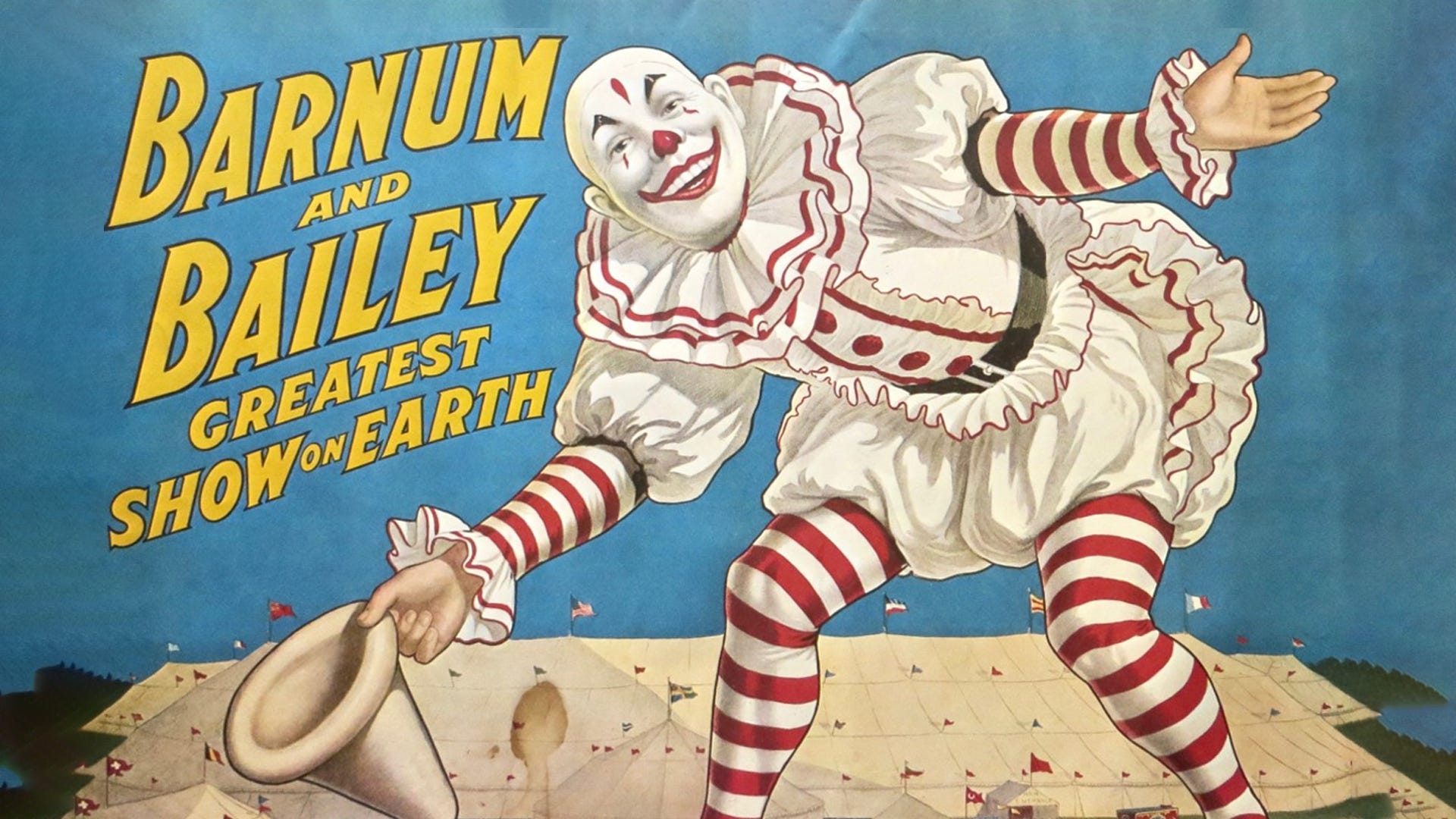
Listening to old men complain about young men is like listening to a conversation about the weather.
It’s so predictable that it’s comforting.
“Oh really, is there a problem with these kids today? Let’s get to the bottom of this…”
Each generation of young men will adopt some goofy style and haircut. They will have strange customs and slangs, and they will do things a little differently as they respond to a different environment than “what we had back in our day, when things made sense.”
One of the predictable features of men is that some of them will always try to distinguish themselves in some way from the men who preceded them.
This is actually why all universalist ideologies schism. The moment you accept that one truth is absolute and reject all tweaking—there’s nothing for the new kids to do. If humanity were ever to develop the perfect system, after a few generations, some new kids would tear it apart out of sheer boredom.
This was actually one of the first criticisms I received about The Way of Men. It was author Sam Sheridan, actually. In a Facebook message, he said something like “don’t men always complain about the failing masculinity of men in the next generation?”
It’s true, they do.
But that doesn’t mean that we can’t notice trends that seem to be moving in the wrong direction.
So, I’m not going to complain about haircuts or slang.
People have attributed so many social and political tendencies to Zoomers and Generation Alpha that reading them is more like listening to someone interpret a Rorschach test than anything else. People see what they want to see.
But I do have one concern that I believe is valid when it comes to “kids today.”
Many who came of age in the last decade do seem to have accepted and internalized what social media taught them: that attention is the highest value, no matter what it is for.
“Well, it got a lot of views and a ton of engagement” seems to be reason enough for saying or doing almost anything. That’s what all of the platforms reward, whether you’re an aspiring political pundit or Mr. Beast.
And that’s what we’re all told to do if we want to be “relevant.”
Say something controversial, maybe even crazy. Get people to fight about it.
It doesn’t matter if it’s true, or whether you believe it—as long as it commands eyeballs and thumbs.
Social media elevates the type who says something wild and then laughs, unaffected, as the plebs fight it out in the comments.
That creates power. One thing I noticed about the Liver King at his peak, is that he’d created and seemed to be feeding off entire ecosystems of haters and supporters. Other people were making money just talking about him. And that just made him more famous. It was impressive, though eventually it seemed to have taken a toll on the man himself. But while it may have broken Brian Johnson, the other Brian Johnson is still running a different kind of freakshow, and Andrew Tate seems to thrive on negative attention. Like the Venom symbiote, hate and rage just seem to make him stronger.
There is no question that creating a spectacle works. You can’t argue with results. People who can command attention and monetize it win the Internet.
But.. is it good?
Does it create the best men, the best society, the best kind of life?
People say, “any publicity is good publicity” all the time. It’s become a modern truism. But people don’t seem to give much thought to where it came from.
While there is no proof that he used exactly those words, the quote is widely attributed to showman P.T. Barnum. I think it’s safe to say that even if he never said “any publicity is good publicity,” it describes his lived ethos.
P.T. Barnum was the founder of the Barnum & Bailey Circus, billed as “The Greatest Show on Earth.” He advertised fake mermaids and a woman who claimed to be George Washington’s 161-year-old nurse. Barnum’s traveling shows featured midgets, Siamese twins, bearded ladies, and even “Jo-Jo the Dog-Faced Boy.”
There’s no record of him saying these exact words either, but he is also widely credited with the quote, “there’s a sucker born every minute.”
P.T. Barnum did describe himself as the “Prince of Humbug,” proudly owning his reputation for hoaxes and “harmless” deceptions.
Barnum was an interesting character, but he’s not a man we should be encouraging other men, especially young men, to emulate. Unfortunately, his ethos is more or less what social media has been teaching kids for the past ten years.
And at the same time, everyone complains that everything is “fake and ghey.”
Well… if you follow the ringmaster’s advice, don’t be surprised when you end up living in a circus.
During last week’s State of the Union Address, we were shown a very different sort of man: U.S. Army Chief Warrant Officer 5 Eric Slover. The helicopter pilot was acknowledged for heroic action in a clandestine mission in Venezuela. Slover was part of a unit known as the “night stalkers” and he was supporting a Delta Force operation. Both groups are well known for working quietly and avoiding public attention.
As he received his medal in front of the Joint Session of Congress and the world via live broadcast, Slover looked extremely uncomfortable. He had the look of a man who knew he was being greatly honored, but who was not used to and somewhat bothered by participating in a massive spectacle.
Chasing spectacles wasn’t what put him in that room. Slover is very likely a man who has spent his life chasing excellence and the quiet recognition and respect of his peers.
Honor is a man’s reputation for virtue in his peer group, and Slover’s virtue fits the oldest Roman definition of virtus there is.
Honor and virtue are the opposite of “any publicity is good publicity.”
While the guy who runs a circus and a freak show revels in being known as the “prince of humbug,” to a man who cares about his reputation for virtue, being publicly recognized as a con artist, a cheat, a liar, or a coward would be deeply disturbing. Imagine what a man like Slover’s reaction to being accused of things like that would be. He would be mortified.
The social media influencer who feeds on attention would call that a weakness. But that’s because he really has no honor or reputation that matters to him. He has no values beyond money and attention, or will say he does and then change them when the wind blows in another direction.
Humans evolved to operate in small groups, and as men, our desire for honor is a product of that kind of environment. How do we process the fickle evaluations of the faceless multitudes?
Many of the best men avoid dealing with that—so we end up seeing less of them and more of the kind of men who seek attention above all else.
We see too many ringmasters and freaks. But being a ringmaster or a freak is probably not the best or most admirable way to live. Yes, it works, but there is a cost. Most of us aren’t made for it psychologically, and I’m not convinced we should try to adapt to it. I don’t think that’s who we should want to become.
Your life is a story. Do you want the story to be, “I stood for nothing, and did anything for attention?”
If I had one thing to say to younger men today, it would be this:
“Don’t take the ringmaster’s advice.”
Stay Solar
This is great. It also made me think of something I often think about when I see some figure who agreed to be profiled for a magazine or something. It is nearly always a bad idea to say yes to a media interview, because you and the writer/journalist have fundamentally misaligned incentives. You want to be written about in a flattering way; the journalist wants clicks and attention, which means sharing some unflattering angle that allows people to go, "I knew he was a jerk!" Which is to say, the journalist/writer nearly always makes the profiled person look like an ass hat. So I always wonder why people say yes to interviews. Maybe some think that they'll be an exception and come off looking great. But I also think they figure any publicity is good publicity. And I don't think that's correct.
Well-said, Jack. As an older (than you!🤪) former LEO/SWAT guy, there is much to be said for being the quiet professional, and that of honor and virtue. Nothing matters to him more than the respect of his small group of peers with whom he has braved danger and difficulty.